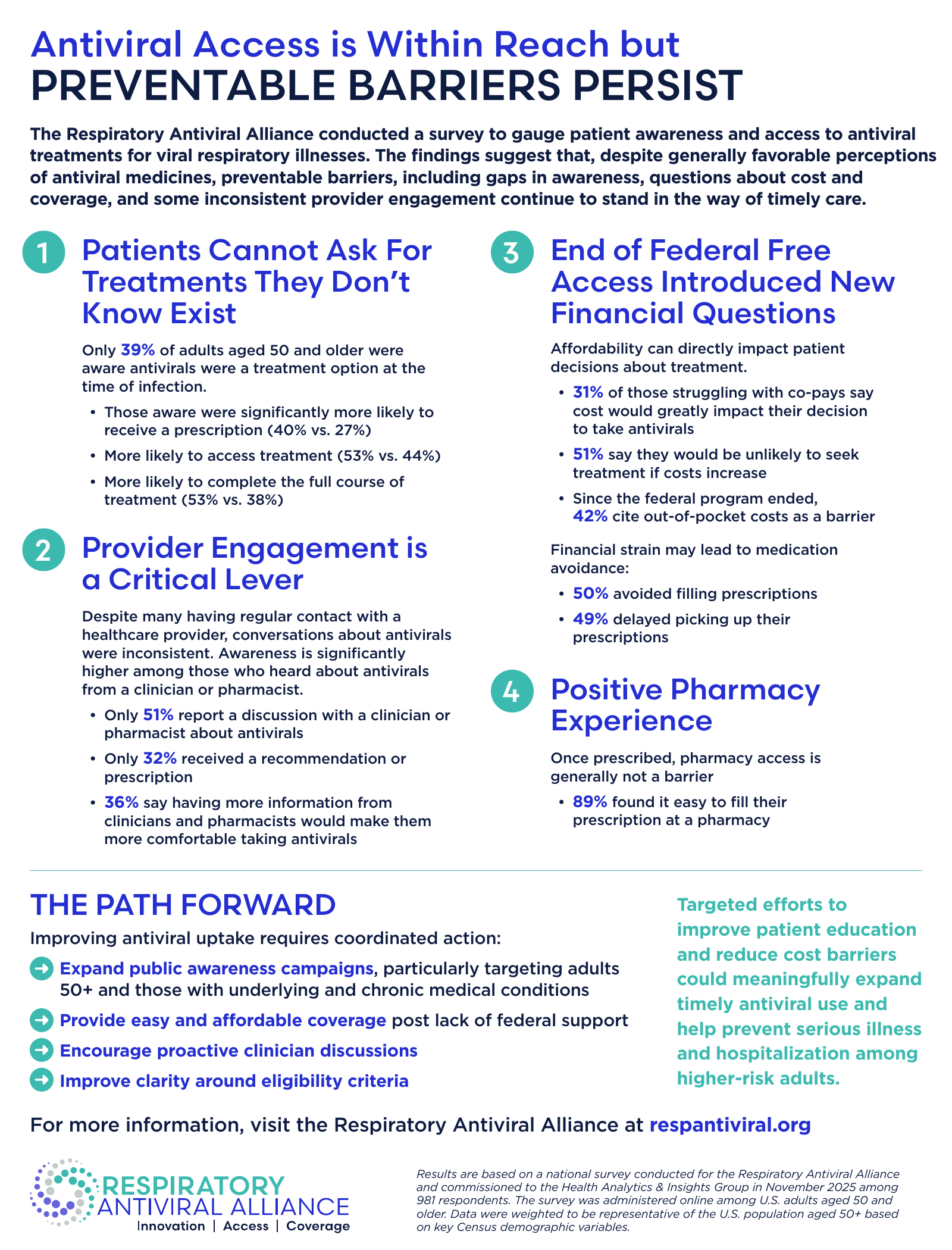

Conversations with a clinician or pharmacist can play a critical role in how people protect and manage their health. However, these conversations are limited when it comes to respiratory antiviral knowledge among patients. A recent Respiratory Antiviral Alliance (RAA) survey shows that conversations about antiviral treatment options for the flu, COVID-19, and RSV are not occurring as often as they should.
Among respondents who were already aware of antivirals, only half reported discussing them with a healthcare professional. For those who were not previously aware of antivirals, that number drops to just 32%. This gap is particularly concerning for individuals at higher risk of severe outcomes from respiratory viruses, including older adults and people living with underlying medical conditions.
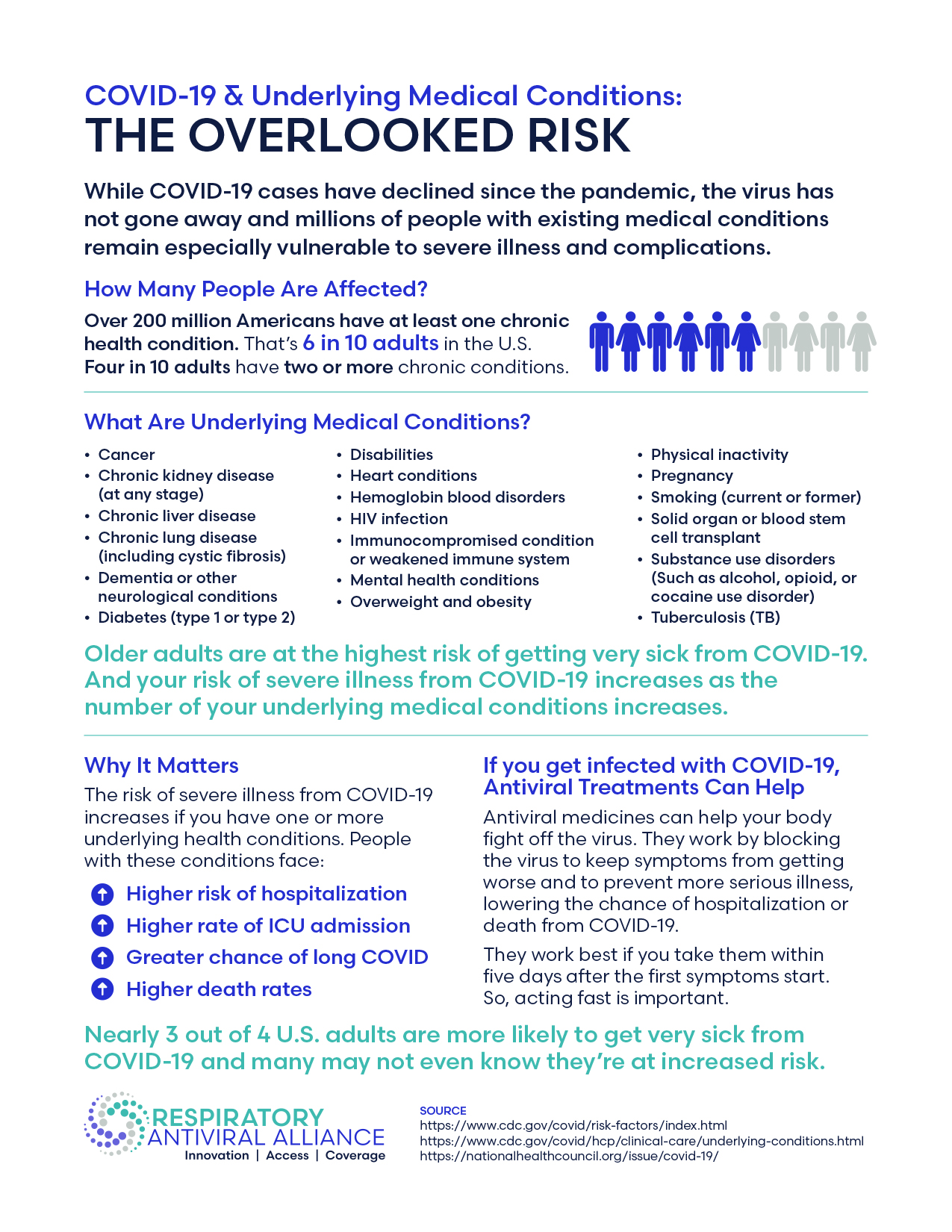
Timing is key. Antivirals work best when started within the first few days of symptoms. When used early, antiviral medications can help reduce the severity of symptoms, lower the risk of hospitalization, and prevent more serious complications.
Patients recognize their value. Seventy-five percent of respondents view flu and COVID-19 antivirals positively, yet only about half say that a doctor, nurse, or pharmacist had discussed them as a treatment option.
When clinicians and pharmacists don’t proactively raise antivirals as potential treatments, patients may miss the narrow window when these treatments are most effective. As a result, they may lose the chance to recover faster and avoid more serious illness.
Healthcare professionals can close this gap by making conversations about antivirals a routine part of care, particularly for patients at higher risk. Ideally, these discussions should happen before patients get sick, helping them understand their risk, their options, and the need to act quickly if symptoms appear.
With effective antiviral treatments available for flu, COVID-19, and other respiratory illnesses, the healthcare community has a clear opportunity to ensure these medicines are part of early, informed, and consistent patient care discussions, helping those at highest risk stay out of the hospital and recover safely at home.
Normalizing antiviral discussions is a practical step that can improve outcomes, reduce hospitalizations, and ensure high-risk patients receive timely treatment.